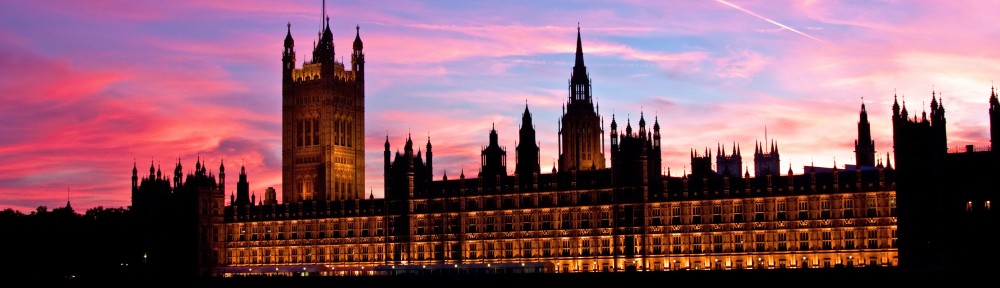
“Tories ousted by Labour coup?” Worcester or Westminster?

Tories Ousted? What Coup? ….Westminster or Worcester….?

worcester newsSomething interesting happened recently in Worcester – The Labour Party, Lib Dems and Greens formed a coalition and ousted the Conservative leader who had led the council for seven years. This was because Worcester woman and man returned a council with No Overall Control.

During angry exchanges in the council chamber, deposed council deputy leader Councillor Marc Bayliss lambasted it as an “unprincipled coup by a new socialist alliance”, claiming it was about “national ideology, not the performance of the administration or leader.”“What the party opposite could not achieve through the ballot box, they are now forming through a shady deal,” he said.

Fellow Tory Councillor Andy Roberts, who lost his £5,985 role as cabinet member for finance, said it was a “shameless” agreement done behind their backs.

Some might be surprised at the reaction considering the situation following the General Election when there was no party in parliament with overall control. “Shameless agreement behind backs?” Who can forget the days following the General Election when it was unclear who would be the governing party? It seems that those Worcester Tories cannot see the parallels between Worcester and Westminster. Some might say that rather than a government with no overall control, this is a government out of control. Certainly, they are pushing through policies from no party’s manifesto.

The Tories act as if they had won overall control, a working majority. The Liberal Democrat vote was boosted by some centre left voters, who had trusted Clegg’s pledges. Those voters see little difference now between either members of the Coalition, the social democrat element of the LibDems having been engulfed by a government more right wing than Thatcher. The Tories realise this, and, clutching at straws hope for a Clegg replacement which might retain those votes which enabled this fudged coalition.

(New Statesman: Conservatives for Cable – Why the Tories want a new Lib Dem leader)

If it is to win the next election, Cameron’s party needs a Lib Dem leader who can win over Labour voters in Tory-Labour marginals. At present, after the defection of around a third of 2010 Lib Dem voters to Labour, the Tories stand to lose dozens of seats at the next election (Corby was an early warning) – there are 37 Conservative-Labour marginals where the third place Lib Dem vote is more than twice the margin of victory.

The suffering inflicted by this government will not be forgotten so easily by the electorate. What impact have the Liberal Democrats had on the direction of this extreme right wing government? What principles have been thrown away at the cost of power? During that seemingly interminable weekend immediately after the election and before the Coalition agreement, there were contradictions. Shirley Williams warned Nick Clegg about going into a coalition with the Conservatives. Paddy Ashdown spoke on Andrew Marr show, some excerpts here..

“The nation has spoken and in so far as we can determine what it’s said, it’s said you guys are … we’re going to give none of you power to govern alone; you’ve got to learn the habit of working together….”

“We want to preserve frontline services… “

“I don’t believe that anybody can now establish a new government who is deaf to the calls from the British people for a reform to our political system.”

Vince Cable said in December 2010, that he could quit the Coalition. Think Left’s “contradictions of Liberal Democrat Opportunism” examined the focus of Liberal Democrats on power over principle. Many Liberal Democrat voters and grassroots now look to other parties especially Labour, and must wonder why the party they worked for at the General Election have voted for a Bill leading to the break up and privatisation of the National Health Service? This was sold for a referendum on AV which was duly lost. Was this really a price worth paying?

Why do the Lib Dems stay in the Coalition?”

  • We might well ask this question following the failures of AV and House of Lords reform, that being in government has not given them a ‘sufficient legacy’. John Kampfner’s extraordinary piece in the Guardian ‘The Lib Dems are in a stronger position than the Tories – but hide it well” – Cameron needs Clegg more than Clegg needs Cameron – so why won’t the Lib Dem leader show some muscle?’
  • The much vaunted Pupil premium was supposed to be ‘the reddest of the Liberal Democrats’ red lines’ with an additional £2.5 bn for the education of disadvantaged children. But, in fact, the pupil premium was ‘robbing Peter, to pay Paul’… the majority being recycled from within the education department’s budget’ – largely from the abolishing of EMA.
  • Another LD ‘achievement’ was to raise the personal allowance, ‘taking the poorest out of taxation’, but Patrick Collinson in the Guardian dismissed it as an ‘empty gesture’ As income goes up benefits will go down, and a million more basic-rate taxpayers are set to move into 40% tax band.
  • Lib-Dems claimed that they went into Coalition with the Tories because the UK was on the verge of becoming like Greece, and that the Labour government had irresponsibly overspent on public services. Not only was the national debt inflated by the of banking losses rather than by public spending , but this would never have been the case for the UK, with its own currency.
  • The popularity for the Lib Dems in 2010 by the younger generation, and by students in particular, was no doubt boosted by the pledge to abolish tuition fees, yet we learn Clegg intended to abandon the pledge well before the election.

Lib Dems would do well to consider these arguments from Hucknall’s Councillor Jim Grundy, against their support of this Tory government. The recent by-election in South Shields showed the measure of anger from the electorate, as the Lib Dems were annihilated.

i voted lib dems

Every day that the Liberal Democrats continue to support this government, they let down the British people. Crossing the floor of the House of Commons might just earn them some respect before they inevitably suffer death throes and subsequent extinction.

Is Britain Short of Skills?

Is Britain Short of Skills?

By Liam R Carr

previously published here

We often hear that employers can’t find people with the right skills. This may be used as an excuse for not taking workers on. The alternative approach is to employ someone with potential then invest in their training. The austerity-only approach of the government has created a climate where even business owners who are making massive profits prefer to sit on reserves of cash rather than invest in training a future workforce.There is however, a real skills shortage. Here are a few examples where there is a need for workers.
Science and Engineering: 
Engineers are needed in the Nuclear, offshore and renewable energy industry. There is a need for geologists, geophysicists and environmental scientists. Specialist high integrity pipe welders and high voltage overhead line repairers are desperately needed to work on pylons and in the energy sector.
Creative Industries: 
2D and 3D animators for film, TV and the computer games industry are in short supply, as are skilled chefs, ballet dancers and classical musicians (even in a recession, the rich still need to eat expensive food, listen to the philharmonic and enjoy the ballet )
Medicine and Health:
There is a shortage of haematologists, psychiatrists specialising in care of the elderly, clinical neurophysiologists, radiographers and neonatal nurses.The real tragedy is that there is a skills shortage in regions of high unemployment. Skills need to be put on the agenda in schools and colleges but all we see are retrograde steps.
 Gove wants to see students doing more traditional subjects; vocational courses are seen as less valuable. This is not the case in other countries. In Germany for example vocational and academic courses are seen as equally valid. It is possible to provide students with a variety of opportunities without creating a two tier system. A Tory approach to a skills shortage is to do nothing. They wait in hope that ‘market forces’ will sort everything out. Tackling youth unemployment is far too important to be left to market forces. We need to change perceptions of vocational education and run courses in parallel to GCSEs and A-Levels. Level 4 apprenticeships which are taken after A-Levels, should be applied for through the UCAS system rather being something obscure and separate.

The reality is this: We are living in a country where the children of today will have fewer opportunities than their parents. It is our duty to equip the workers of tomorrow with the skills they need to get on. In refusing to address this issue the government is failing the next generation, they are a government of opportunity for the few and the scrapheap for many.    


The Mysterious Disappearance of Jobs and Skills

The Mysterious Disappearance of Jobs and Skills

When Norman Tebbit made a notorious comment that jobs could be easily found merely by hopping onto a bike, he made an assumption that it would solve unemployment because that’s father what his did, apparently. He repeated such advice this February by saying if Eastern Europeans migrate for work, why can’t the Brits?

How starkly this contrasts with what we are hearing Tory back benchers cry in the wake recent success of UKIP! Are we seeing a sudden surge to the extreme political right and 1930s divisions in society as ordinary people blame one another for high rates of unemployment, increasing poverty and unaffordable housing?

Deborah Orr (Guardian) comments: People are told EU migrants steal jobs – in truth bosses want cheap labour . People are told that immigrants stole their jobs. In truth, it was employers who wanted a ready supply of workers unused to the living conditions that it took the second world war for the ordinary people of Britain to achieve. The goal of neoliberal globalisation is supposedly a redistribution of wealth around the planet. It also, as the EU itself is discovering, redistributes poverty.

History has led to migrations of the workforce. In Cornwall, tin and copper had been mined for 4,000 years. Closure of the majority of Cornish tin mines forced whole communities to migrate in the 19th Century, leaving behind empty villages, graveyards surrounding them (Gwennap) the evidence that communities were once busy with industry.

tin_minerabove150Cornish tin miners faced

increasing competition

from alluvial mines abroad

Families were forced to move – or else starve. The simple fact was that the mine owners closed the mines, not because there was no longer a need for copper or tin. It’s because there was more money to be made elsewhere. Cheaper labour makes those looking to line their own pockets to ignore the plight on those who have come to depend on them – because they had the power to do so.

tin_mine203

In the 20th century a few mines survived, but the shortage of work put pressure on the working people. A row of differential pay rates resulted in a strike which pitched miner against miner, family against family, and only ended with the onset of WW2 and the greater demand for tin. Cornwall has never really recovered from the decline of this millennia old industry, and poverty exists there today.

  • How and when did these mine owners come to own the land and mines?
  • Why did such a few people have power over the many?
  • Who benefited from metals extracted from mines?

Removal of workers’ autonomy, their rights to sell labour for a living wage leads not only to their downfall, but that of everyone. The very rich may have the power to determine who shall have work and who shall not, yet their own very existence requires the same basic needs, provided by those workers. The race to the bottom, the search for the cheapest, poorest labour is fundamentally flawed, only a fool will argue otherwise.

Mankind’s survival has always involved work or labour – growing food, making clothes, caring for the community. Much of this work did not involve payment. Because of a division of labour, we can trade our skills, each contributing and receiving. Having a tradeable skill empowers us. If we can no longer cook a meal without a ready meal or grow our own food, we become yet more dependent on the supermarkets and their global supplies and speculation.

If we can no longer make garments, we buy-in fashion produced cheaply and unethically, thousands of miles away. In Bangladesh, cheap clothes come at human cost as health and safety of workers has no importance resulting in a deadly fire where hundreds died.

Yet, even now, the ConDemNation Coalition government aim to return UK to Victorian conditions, and have already removed workers’ right to health safety in the UK workplaces, and abolished the agricultural workers wages board. (See 114 year workers’ rights scrapped by Coalition government) Then UKIP, clearly trading on fear of unemployment and poverty, do not speak for working people. They are no party, but a bundle of individuals with extreme, bizarre attitudes, for example, Geoffrey Bloom, who advocates that employers should not employ women of childbearing age.

Deskilling a population disempowers them, to say nothing of lack of self-respect, independence and the prospects of lives in poverty. Thatcherite policies of attacking trade unions, decimating British manufacturing, closure of coal mines, ship-building, car industries, clothing and so on, led to massive unemployment, and broken communities, just as in the Cornish tin mines. Even food is being imported unnecessarily, for cheapness, and recent the recent horse meat scandal exposed the dangers of lack on control and monitoring. Lack of investment in education and training will not create a skilled workforce.

The Labour Party are setting out plans for full employment

“For Labour, that goal of full employment has always been the foundation for getting our country back on its feet. It was for Atlee’s Labour. It was for New Labour. It will be once more for One Nation Labour. Today the goal of full employment is important for a very simple reason. The faster we return to full employment, the faster we can pay down our debt. And the faster we can put the “something for something” back in to social security.

The Tories’ problem isn’t just that they are failing, but that they lost a belief in full employment many years ago, and never rediscovered it. That means more money spent on unemployment, so there is less to go around for working people and less for care.

After three years of failure we’ve got to find new ways to break out of this viscous circle. Seventy years ago, we set out a new path to full employment. Just as the Beveridge Report is a still a good roadmap for today, so too is the 1944 White Paper on Full Employment. It teaches us to be radical reformers to bring down the costs of social security; building exports; supporting public investment; fanning consumer demand – and taking determined action on jobs. It is a long road, but tackling poor places would be a big first step to getting our country back to full employment.’

From the New Statesman

If the British electorate are concerned about unemployment, they also have a very clear sense of injustice. They see bankers’ bonuses, they see politicians benefit from lobbyists, seeking to line their own pockets rather than serving the people, as they were elected to do. This week Ed Miliband’s Labour Party has pledged to address the Tax Justice.

He’s specifically committed to:

■ Pursue a new global system where multinationals must publish their revenues, profits and other key corporate information useful to revenue authorities in each country in which they operate.

■ Force multinationals to publish such information in the UK even if international agreement cannot be found on the issue, as they do in Denmark.

■ Make it a legal requirement for multinationals operating in the UK to disclose details of any tax avoidance schemes they are using globally.

■ Seek reforms to “transfer pricing” rules to stop companies from shuffling money to other parts of their firm based in tax havens in return for spurious services.

■ Open up the ownership of companies sited in Britain’s tax havens to the UK revenue authorities, but also seek to allow developing countries access to such information.

Whether the popularity of UKIP is a blip, a protest, or anger, it certainly represents an alienated electorate. Those in work feel they are working for the benefit of the rich and powerful. Those without work have little hope of finding work which pays a living wage. Women are hit hard by childcare costs, and equality with men has taken a backward step. Cuts hitting the disabled will make it more difficult, if not impossible for them to work, and those who are old or ill live in fear. It is time to do things differently, let us hope for a socialist Labour government, with policies which will unite people once again.

References and Further reading

Squeezing the Poor: The Economic Consequences of Mrs Thatcher

“Squeezing the poor”

This post by @Ramanan_V prompted me to seek out Nicholas Kaldor’s “The Economic Consequences of Mrs Thatcher”Kaldor was an eminent Cambridge economist and member of House of Lords at the time when Margaret Thatcher came to power in 1979, and this short book is a collection of speeches made during the first four years of Thatcher’s time as PM.

In ’79 when Thatcher rose to power, the UK economy was in trouble, with rampant inflation and low growth with rising unemployment. In the months preceding the ’79 election, Britain had experienced its “Winter of Discontent”. In his first budget in June 1979 Thatcher’s Chancellor, Geoffrey Howe increased VAT to 15%, reduced the top rate of income tax from 83% to 60% and announced reductions in public spending.

While there were many differences in both economic environment and policy between Thatcher’s early years and today, from Kaldor’s speeches, we can draw some interesting parallels between the justifications made for government budgetary decisions made then, and the justifications for austerity being made today. Here are a few examples from Thatcher’s first year in office.

On the incoming Conservative Government (13.6.79, p12):

“…up to now Conservative Governments in this country were predominantly pragmatist… This time it is different. This time we have a right-wing Government with a strong ideological commitment which is something new in this country…”

The new Thatcher broke with the post-war consensus and steered a different course, one which was continued through the Major, Blair and Brown years and a course which the present Government is now trying to accelerate before it’s too late.

On the tax changes in Howe’s ’79 Budget (19.6.79 p19):

“In this Budget the tax remission to a millionaire or to a man with £50,000 a year, is well over £6,000 a year – enough to allow him to get a second Rolls-Royce. Lord Boyd-Carter says that all this is small beer: a small price to pay for the enormous advantages which efficient entrepreneurship and risk-taking can bring us…

In 1979, the Tories cut the basic rate of tax slightly, while at the same time increasing VAT (on many items from 8% to 15%) and significantly cutting income tax for the highest earners. Sound familiar?

On ‘Squeezing the Poor’ (19.6.79 p21):

“The two main contentions of the Chancellor, that the economy must be ‘squeezed’ in order to get rid of inflation and that top people must be better off in order to induce them to work harder and become richer, in themselves imply that some people must be worse off. These people must be the poor people.

[The poor economic forecasts] will not reflect ‘a shortage in demand’ but a ‘growing series of failures on the supply side of the economy’.

Today we have tax cuts for the rich and bedroom taxes and real terms cuts to benefits and wages for everyone else, while poor growth is blamed on ‘the world economy’ and talk of the need for labour market reforms. The similarities to ’79 are unmistakable.

Here’s, Kaldor on ‘The Momentum of Decline’ (19.6.79 p23):

“These policies (in response to inflation in the 1920s) led to the unprecedented crisis of capitalism in the early 1930s, to Hitler and to the Second World War. We can only hope that on this occasion the outcome will not be so tragic. But the tone of the Chancellor’s speech was strongly reminiscent of what was said by Dr Bruning, by Herbert Hoover and by Philip Snowden in his Budget speech. There is one common theme in all those speeches: we must first suffer agony to be able to make a clean start.”

A bit dramatic perhaps, but the idea that austerity is something we must endure in order to renew our economy prevails.

Finally, here Kaldor on ‘An impotent government’ (7.11.79 p38):

“As far as output, employment and economic growth is concerned, the [Comprehensive Spending Review of its time] adopts a wholly fatalistic attitude. All it says is that ‘the prospects are poor… both in this country and the rest of the world’. This reminds me of a statement attributed to Neville Chamberlain during the Great Depression that the government is no more capable of regulating the general demand for labour than it is of regulating the weather. After a long circle, we now seem to have returned to the same point.”

This is very reminiscent of the current Government’s desire to blame all ills on the Eurozone and to stand idle while unemployment remains high, incomes stagnate and the housing crisis worsens.

The point of quoting the above then is to demonstrate that we’ve been here before (and not so long ago). The likely effects were predicted before the policies were implemented (as with Cameron and Osborne’s austerity). While in Thatcher’s time, the result was three million unemployed and the destruction of British industry, today, unemployment has not gone so high, but only because now we have zero-hour contracts, part time work and working tax credit-supported self-employment instead. The long-term impacts though could be equally as damaging.